WINTER
About an eighth of June
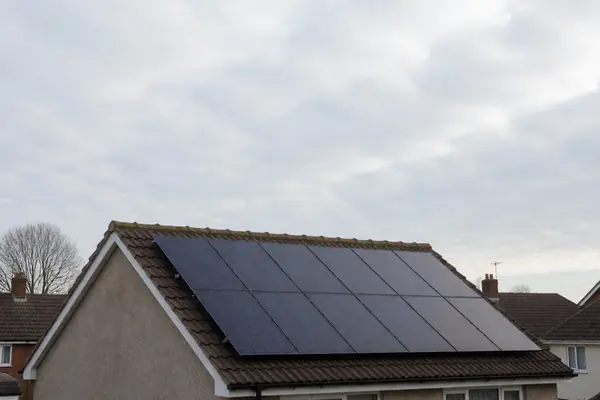
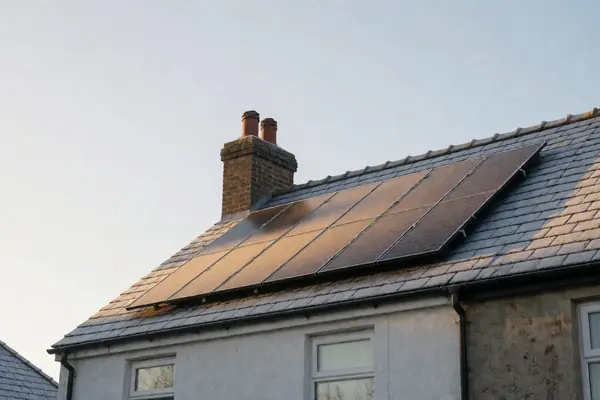
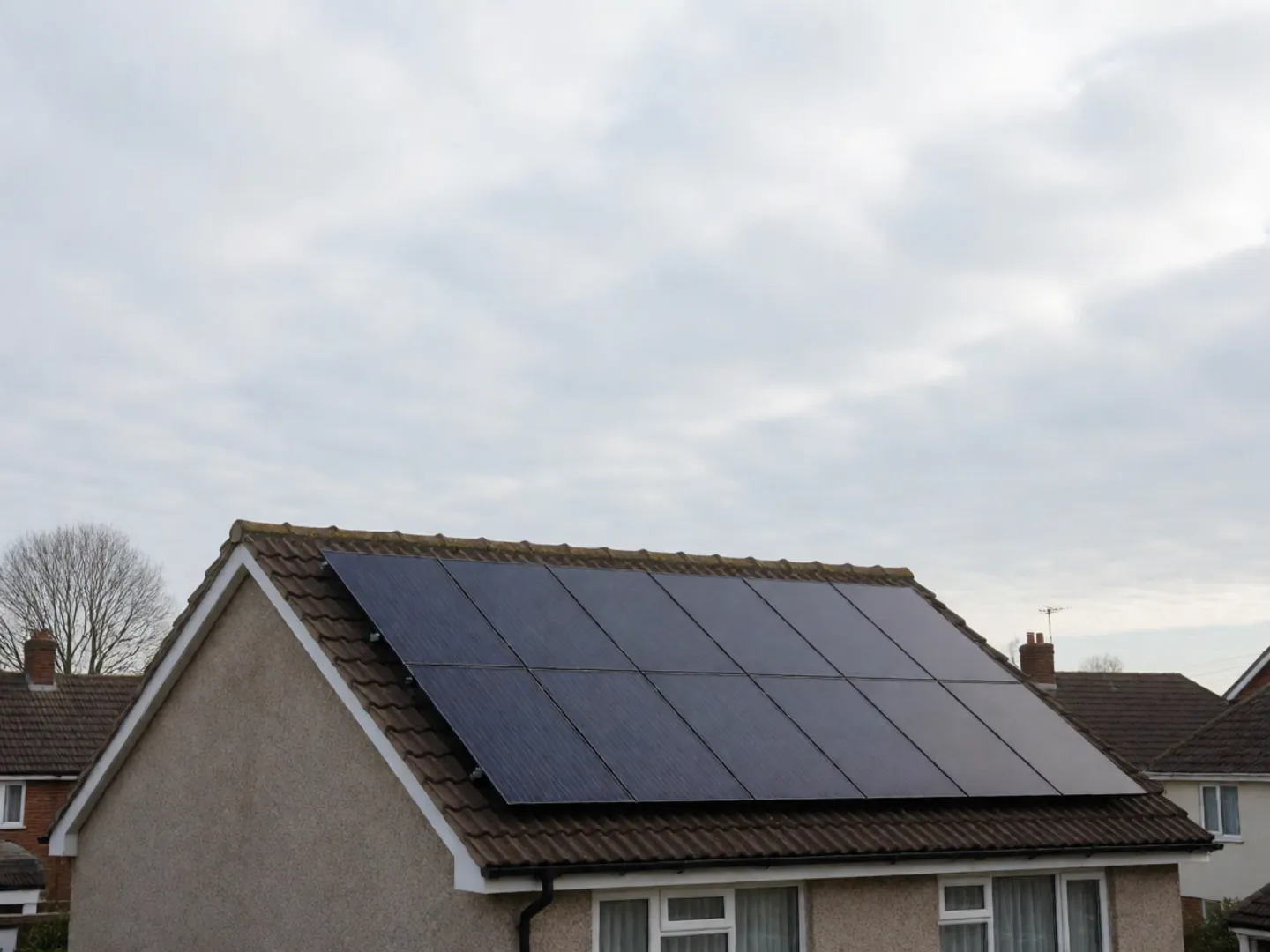
A 2023 Government Office for Science note says that in winter, solar generation drops to an eighth of a typical June day. Days are short and the sun stays low.
Check a month
WHAT THE SEASONS DO
1/8 of June, in winter
AI-generated image, not a photograph of a real person or place.
Solar panels work all year, but not equally.
Short days, a low sun and more cloud cut winter output to a fraction of summer's. Knowing the pattern helps you read your generation figures, plan when to use power and see why something else has to fill the gap.
THE SHORT ANSWER
A panel's output follows the light it gets.
In the UK that changes hugely through the year.
WINTER
A 2023 Government Office for Science note says that in winter, solar generation drops to an eighth of a typical June day. Days are short and the sun stays low.
Check a monthCLOUD
The Energy Saving Trust says panels work best in direct sunlight but still generate on cloudy days, because some of the light they use passes through cloud.
See the numbersSPRING
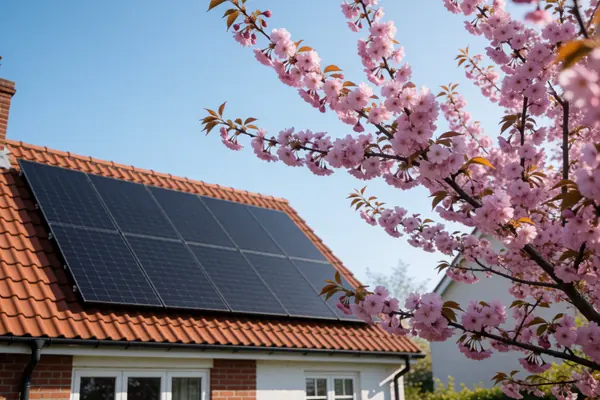
In 2025 the UK had 266.2 hours of sunshine in May against 182.3 in July, and panel efficiency drops in air above 23°C. Bright, cool days do well.
Plan around it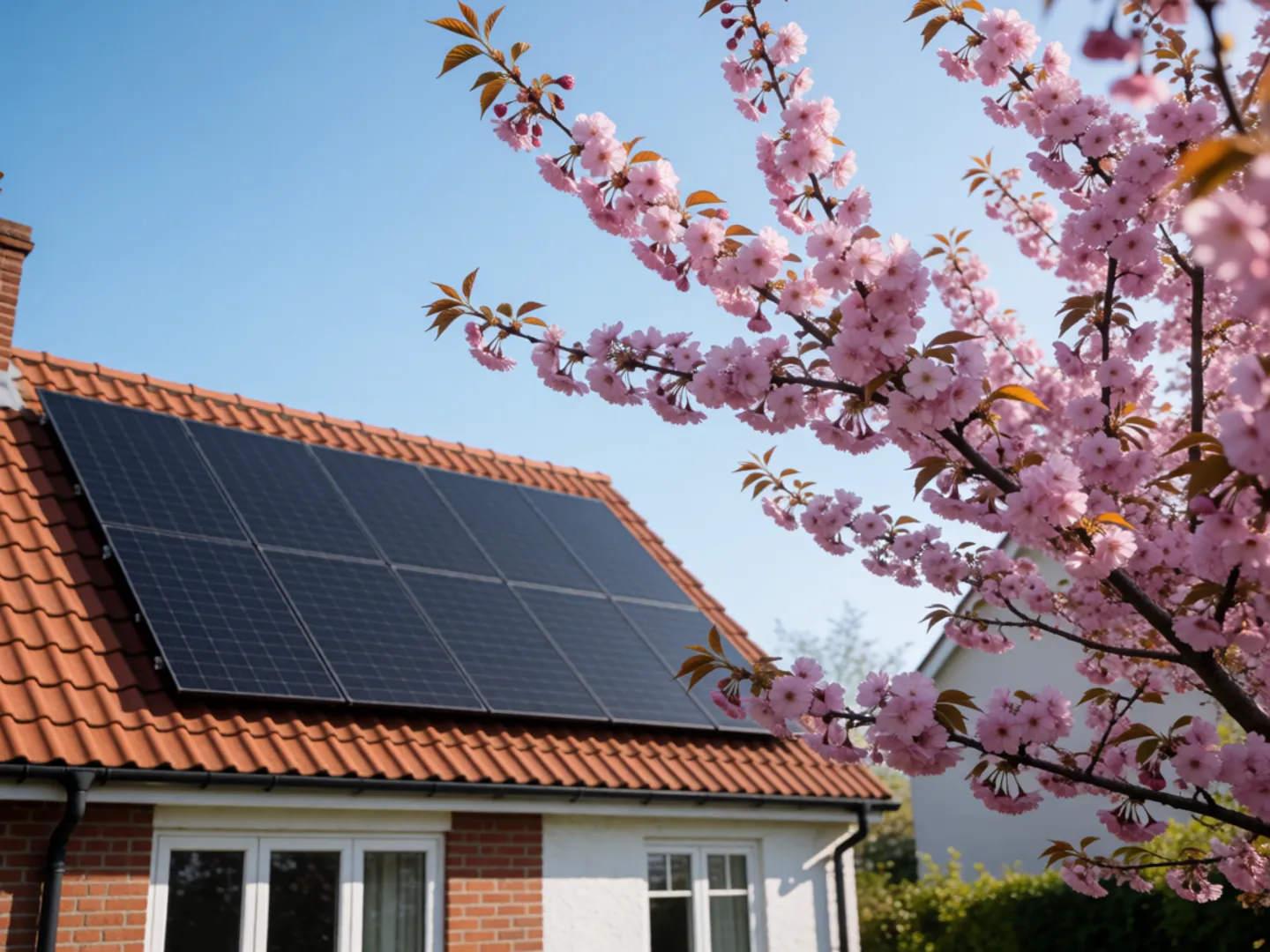
FOUR WAYS TO PLAN
None of these changes the weather. They help you set fair expectations and get more use out of the power your panels do make.
Shorter days, more cloud and weaker sunlight all cut output. A low December reading is normal, not a fault.
Panels work best on a south-facing roof with no shading from trees or buildings. In winter the sun also sits lower in the sky.
The Energy Saving Trust suggests setting timers so appliances run in the day while the panels are generating.
One dull month says little. UK sunshine varied by more than 360 hours between 2024 and 2025.
TWO NUMBERS WORTH KNOWING
One figure on panel output,
one on how little sunshine December brings.
1/8 of June
Winter solar generation vs a typical June day
A Government Office for Science roundtable note, chaired by the Met Office's Chief Scientific Adviser in July 2023, says winter solar generation drops to an eighth of a typical June day.
WINTER OUTPUT · GO-SCIENCE
24.1 hours
Bright sunshine in all of December 2024
The Met Office's UK-wide series records 24.1 hours of bright sunshine for December 2024, against 266.2 hours in May 2025.
UK SUNSHINE · MET OFFICE
Years differ too: the same Met Office series gives 1,281.1 hours of UK sunshine in 2024 and 1,644.8 hours in 2025, the sunniest year in the series, which starts in 1910.
A QUICK MONTH CHECK
Pick a time of year to see what your panels have to work with. The bar shows roughly how much light is available, from the lowest in midwinter to the highest in late spring and summer.
Sunshine figures are UK-wide totals of bright sunshine from the Met Office series; day lengths are for London from Royal Museums Greenwich.
WHAT FILLS THE GAP
Panels make nothing at night and little on a December afternoon, so the rest of the power a home uses has to come from somewhere else. The Energy Saving Trust says a battery can store daytime energy for times you generate less, like at night.
It also notes that solar panels typically cannot power a home during a power cut unless the home is off the grid or extra equipment has been installed. The Government Office for Science note adds that storage helps manage the grid when wind and solar are both low.
In conversation
Yes. The Energy Saving Trust says they work in winter but generate less than in summer because the days are shorter, it is more likely to be cloudy and the sunlight is not as intense.
Yes, though less well. The Energy Saving Trust says they work best in direct sunlight but still generate on cloudy days, because they use wavelengths of light that can pass through clouds.
Spring days are long and often clearer and cooler. In 2025 the UK had 266.2 hours of sunshine in May and 182.3 in July, and a Government Office for Science note says silicon panel efficiency drops above 23°C.
Usually not. The Energy Saving Trust says solar panels typically cannot power a home during a power cut unless it is off the grid or the system has additional equipment, and the same is true of most batteries.
Royal Museums Greenwich says the winter solstice day lasts 7 hours 49 minutes and 42 seconds in London, 8 hours 49 minutes shorter than the summer solstice.
Each figure on this page comes from the sources below.
ABOUT THIS NAME
sunnysolarbackup.com is part of the DoodleSale portfolio. It isn't in an auction right now, but you can ask about leasing it.